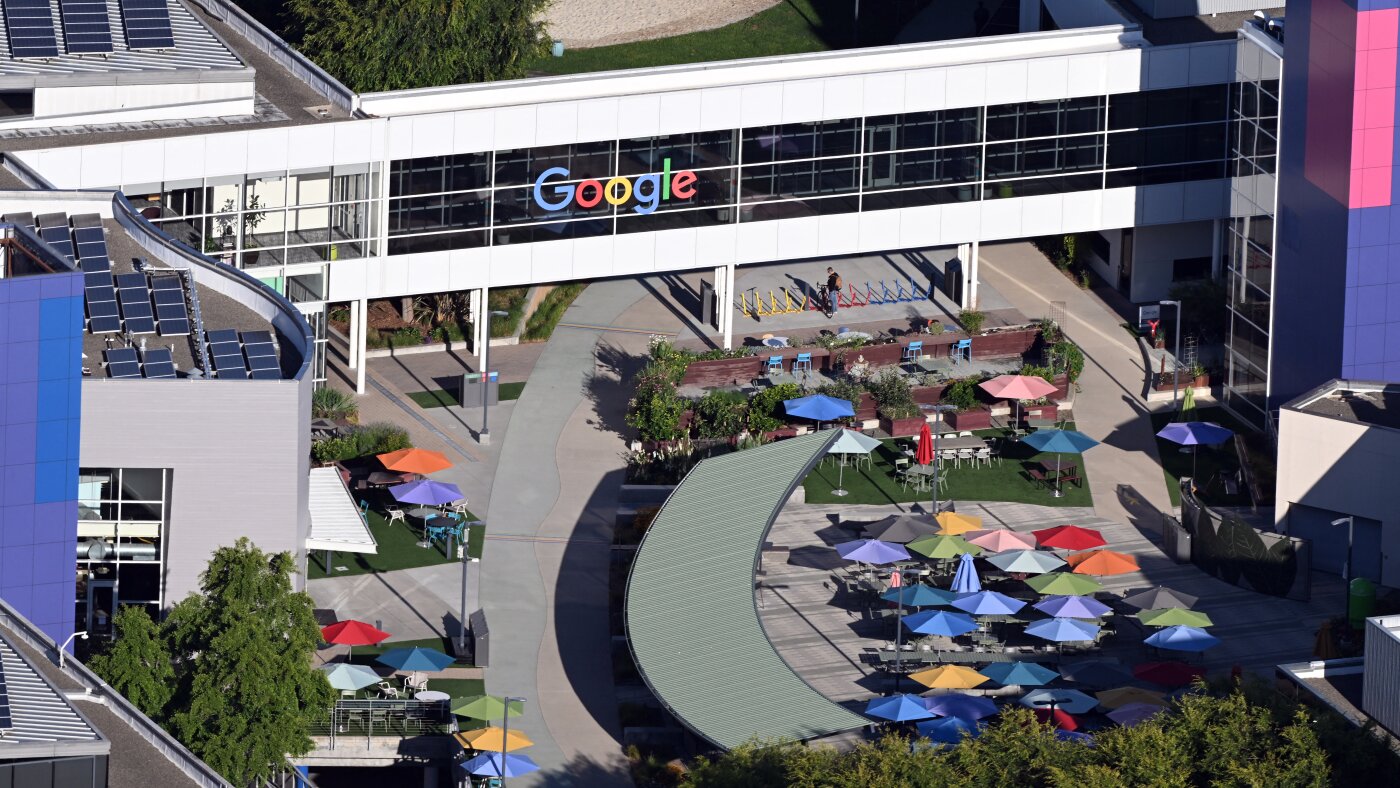
Insider Trading Prediction Markets - earnings forecasts, analyst expectations, and price targets tracking. The U.S. Department of Justice has filed criminal charges against a Google employee for allegedly using insider information to execute trades on the prediction market platform Polymarket, generating approximately $1.2 million in profits. This marks the second known instance of federal prosecutors targeting insider trading on a prediction market site, signaling increased regulatory scrutiny of these emerging financial platforms.
Live News
Insider Trading Prediction Markets - earnings forecasts, analyst expectations, and price targets tracking. While data access has improved, interpretation remains crucial. Traders may observe similar metrics but draw different conclusions depending on their strategy, risk tolerance, and market experience. Developing analytical skills is as important as having access to data. According to a report from NPR, the Department of Justice (DOJ) recently charged a Google staffer with insider trading related to transactions on Polymarket, a popular prediction market platform. The employee allegedly obtained non-public information and used it to place bets that generated roughly $1.2 million in personal gain. Authorities have not disclosed the specific event or information that was traded on, but the charges represent a significant step in applying traditional insider trading laws to decentralized prediction markets. This case follows a previous prosecution where federal criminal charges were filed against an individual for similar conduct on a prediction market site, suggesting a pattern of enforcement. The DOJ’s action highlights that such platforms, while often compared to gambling or futures markets, are subject to securities and fraud laws when material non-public information is involved. The employee’s identity and the exact nature of the trades have not been publicly released beyond the affiliation with Google. The charges come amid growing interest in prediction markets for forecasting election outcomes, economic data releases, and corporate events. Polymarket, which operates using blockchain technology, allows users to trade on the probability of future events. Regulators have been monitoring these platforms for potential manipulation and insider trading risks, especially as their popularity increases.
DOJ Charges Google Employee Over Polymarket Insider Trading Allegedly Netting $1.2 Million Monitoring commodity prices can provide insight into sector performance. For example, changes in energy costs may impact industrial companies.Some traders use alerts strategically to reduce screen time. By focusing only on critical thresholds, they balance efficiency with responsiveness.DOJ Charges Google Employee Over Polymarket Insider Trading Allegedly Netting $1.2 Million Real-time tracking of futures markets often serves as an early indicator for equities. Futures prices typically adjust rapidly to news, providing traders with clues about potential moves in the underlying stocks or indices.Some investors integrate technical signals with fundamental analysis. The combination helps balance short-term opportunities with long-term portfolio health.
Key Highlights
Insider Trading Prediction Markets - earnings forecasts, analyst expectations, and price targets tracking. Predictive analytics are increasingly used to estimate potential returns and risks. Investors use these forecasts to inform entry and exit strategies. Key takeaways from this development include the DOJ’s clear stance that insider trading laws extend to prediction market activities. This could have significant implications for platforms like Polymarket, which have operated in a relatively gray regulatory area. The application of traditional securities fraud statutes to trades on prediction markets may force operators to implement stricter compliance measures, such as enhanced user verification, trade monitoring, and information barriers. Another important implication is the potential chilling effect on employees of major corporations who might consider using internal information for personal gain on these platforms. The charges serve as a warning that such behavior could lead to criminal prosecution, not just civil penalties. For the broader financial technology sector, this case may accelerate regulatory discussions around the classification of prediction market contracts—whether they are considered securities, derivatives, or gambling instruments. The involvement of a Google employee also raises questions about corporate compliance policies. Companies with access to sensitive data may need to update their codes of conduct to explicitly prohibit trading on prediction markets based on proprietary information. The case could prompt more rigorous internal monitoring of employees’ activities on such platforms.
DOJ Charges Google Employee Over Polymarket Insider Trading Allegedly Netting $1.2 Million Predictive modeling for high-volatility assets requires meticulous calibration. Professionals incorporate historical volatility, momentum indicators, and macroeconomic factors to create scenarios that inform risk-adjusted strategies and protect portfolios during turbulent periods.Trading strategies should be dynamic, adapting to evolving market conditions. What works in one market environment may fail in another, so continuous monitoring and adjustment are necessary for sustained success.DOJ Charges Google Employee Over Polymarket Insider Trading Allegedly Netting $1.2 Million Combining technical indicators with broader market data can enhance decision-making. Each method provides a different perspective on price behavior.Analytical platforms increasingly offer customization options. Investors can filter data, set alerts, and create dashboards that align with their strategy and risk appetite.
Expert Insights
Insider Trading Prediction Markets - earnings forecasts, analyst expectations, and price targets tracking. Professionals emphasize the importance of trend confirmation. A signal is more reliable when supported by volume, momentum indicators, and macroeconomic alignment, reducing the likelihood of acting on transient or false patterns. From an investment perspective, this case underscores the ongoing regulatory uncertainty surrounding prediction markets. While they offer innovative ways to hedge against or speculate on events, the legal landscape remains evolving. Investors and users of these platforms should be aware that participation carries potential legal risks, especially if trades are informed by non-public information. The DOJ’s actions suggest that authorities are willing to pursue criminal charges, which could affect the valuation and operational models of prediction market companies. Looking ahead, this development may influence how regulators approach other novel financial technologies, such as event-based derivatives and blockchain-based betting. The precedent set here could lead to more defined rules on what constitutes illegal conduct in these markets. However, no immediate sweeping changes are expected, and the specific outcome of this case will likely depend on the evidence presented in court. Participants in prediction markets should exercise caution and adhere to existing laws regarding insider trading. The broader financial industry will be watching this case closely as it may shape the future compliance frameworks for decentralized trading platforms. As always, any analysis of such legal actions should consider that outcomes are uncertain and subject to judicial interpretation. Disclaimer: This analysis is for informational purposes only and does not constitute investment advice.
DOJ Charges Google Employee Over Polymarket Insider Trading Allegedly Netting $1.2 Million Many traders use a combination of indicators to confirm trends. Alignment between multiple signals increases confidence in decisions.Some traders combine sentiment analysis with quantitative models. While unconventional, this approach can uncover market nuances that raw data misses.DOJ Charges Google Employee Over Polymarket Insider Trading Allegedly Netting $1.2 Million Investors often experiment with different analytical methods before finding the approach that suits them best. What works for one trader may not work for another, highlighting the importance of personalization in strategy design.Real-time updates reduce reaction times and help capitalize on short-term volatility. Traders can execute orders faster and more efficiently.